
Building a high-performing business does not just happen. It takes discipline, boundless drive and energy, and people who are aligned, focused, and pulling in one direction.
Equipping yourself with six skillsets to lead the business effectively can accelerate your journey to high performance and ‘world-class’.
Six skillsets you need to lead the business
#1 Position yourself as a Change Agent
The one constant in the market today is change. Whether you see change as an opportunity or a threat, a friend or a foe, the impact of change is real.
Most change programmes are poorly executed. I’ve seen firsthand the mess companies can get themselves into when they try to implement new IT systems, performance frameworks, or even a new vision, values, and culture in the workplace.
While change may originate from a response to a threat or a movement toward an opportunity, internally or externally, the reason for the change is articulated to motivate others to support the initiative.
The ‘why the need for change’ is translated so that the individuals, who are usually most removed from the decision-making process but are most impacted by the change, can make sense of it and, most importantly, feel like change is done by them, not to them.
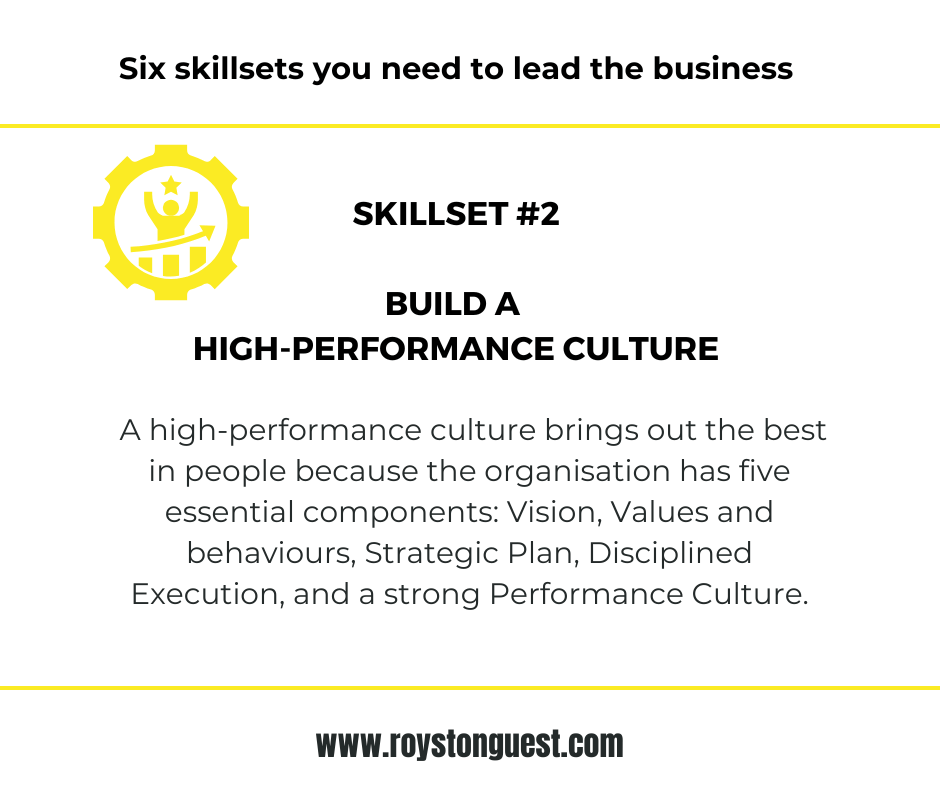
#2 Build a high-performance culture
A high-performing organisation works together effectively for a common purpose and goal. It’s a certainty that you know a high-performing organisation when you see one. There are clues all around.
In over 120 years, the New Zealand All Blacks have become renowned for pushing the limits of physical performance on the rugby field and upholding the team’s honour off it.
Building a high-performing organisation isn’t an overnight fix. Not only will it take work, commitment, and time, but it also needs five essential components all working together in unison.
#3 Become more commercial ‘savvy’
Developing a commercial mindset is essential for today’s leader. Understanding your business’s competitive battleground and the strategy you have in place to fight and win on this battleground is the difference between a good business and a great business. It might not be as vicious or cutthroat as ‘Game of Thrones,’ but it is still a battleground.
#4 Develop a laser beam customer focus
There is a massive philosophical shift in how businesses think about acquiring, maximising, and retaining customers, and it’s affecting your business right now.
Where you have previously been able to focus on building great products and services as a competitive advantage, achieving your business’s full potential will require something entirely different in the future.
Unfortunately, too many businesses fall into the trap of the polar opposite. They build technical solutions, products, and services inside out without any due thought, consideration, input, or testing with the actual customer.
Don’t over-engineer your customer journey, adding costly processes and touchpoints that don’t ultimately add additional value in your customers’ minds.
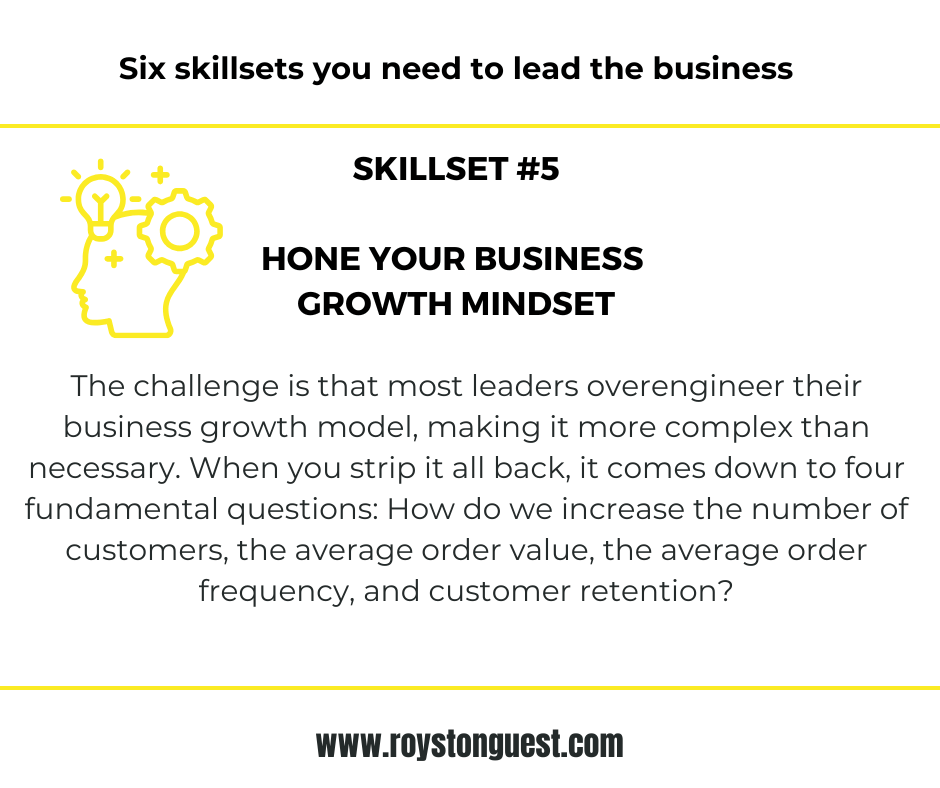
#5 Hone your business growth mindset
Without customers, businesses don’t exist. The challenge is that most business leaders overengineer their business growth model, making it more complex than necessary.
A structured and sustainable business growth strategy to help you grow your business organically year-on-year is now more critical than ever. Yes, you can reduce costs to increase profits, but reducing costs is finite. You can only cut back so far. Yes, you can buy a competitor or similar business to drive growth, but with this comes additional cost. Plus, the significant amount of effort it will take to manage the integration.
#6 Master stakeholder engagement
Mastering stakeholder engagement is crucial in business today because it directly impacts the success of projects, initiatives and overall business outcomes.
Engaging with stakeholders effectively builds trust and credibility, essential for collaboration and long-term support. It also ensures alignment by understanding their expectations, helping to reduce the risk of conflict or miscommunication. Active engagement increases support and buy-in, which are often critical for securing resources, approvals, and commitment.