The alarm clock sounds each morning like a starting gun, launching us into a whirlwind of activity. Before our feet even touch the floor, we’re mentally rehearsing the day’s agenda, juggling priorities, solving problems, and anticipating challenges.
Sometimes we’re dancing alone, consumed by a particular issue or challenge. Other times we’re moving in sync with colleagues, clients, friends, and family. And increasingly, it can feel like we’re trying to dance to several different tunes all at once.
One moment you’re moving comfortably to one rhythm, and the next the music changes. It’s as though someone else has control of the playlist, constantly skipping tracks while you’re expected to keep up.
The Power of the Balcony
Leadership expert Ronald Heifetz famously talks about the importance of getting off the dance floor and onto the balcony.
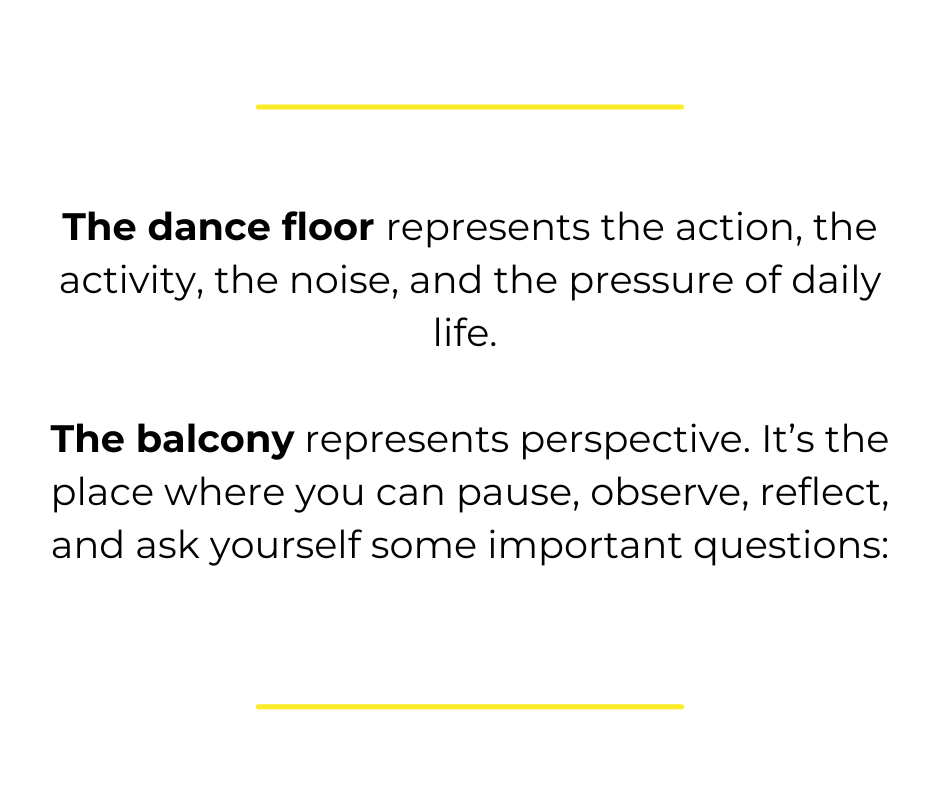
Am I on the right dance floor?
Am I dancing to the right music?
Am I creating my own rhythm or constantly responding to someone else’s?
Am I where I want to be?
Is the direction I’m moving aligned with the life I want to create?
Time on the balcony allows us to develop self-awareness. It gives us the opportunity to step back from the emotion, the urgency, and the distractions, and make conscious decisions about how we live, lead, and spend our time.
It’s where we decide what deserves our energy—and what doesn’t.
It’s where we choose which music we’re prepared to dance to, and which tunes we’ll politely decline.
Why Most People Never Leave the Dance Floor
The challenge is that many people spend almost all their time dancing. They become trapped in a cycle of reacting rather than leading. Emails, meetings, deadlines, notifications, responsibilities, and other people’s expectations create a soundtrack that seems to play on repeat.
Days become weeks. Weeks become months. Months become years.
Before long, we’re busy—but not necessarily productive.
Active—but not necessarily effective.
Moving—but not necessarily progressing.
In today’s fast-paced world, focus has become one of our most valuable assets.
Our ability to focus on the few things that truly matter often determines whether we achieve our goals or drift further away from them.
Taking Stock: Five Questions That Create Clarity
Whether you’re reviewing the last month, quarter, or year, stepping onto the balcony starts with asking better questions. It’s often said that the quality of our lives is determined by the quality of the questions we ask ourselves.
One simple but powerful exercise is to reflect on the following:
What will I stop doing?
Identify the activities, habits, or commitments that no longer serve your goals.
What will I do less of?
Consider where you may be investing too much time, energy, or attention.
What will I keep doing?
Recognise the behaviours and disciplines that are producing positive results.
What will I do more of?
Determine the actions that create the greatest impact and deserve more focus.
What will I start doing?
Identify the opportunities, habits, and initiatives you’ve been postponing.
This exercise takes only a few minutes but can create extraordinary clarity and focus. Whenever you feel overwhelmed, distracted, or off course, return to these five questions.
Knowledge Isn’t Power
We’ve all heard the saying: “Knowledge is power.”
But in reality, knowledge alone changes very little. Applied knowledge is power. Throughout my career, I’ve met countless intelligent, capable, highly knowledgeable people. Many of them know exactly what they should be doing.
Yet their results often fail to reflect their knowledge.
Why?
Because success isn’t determined by what you know. It’s determined by what you do with what you know.
The gap between potential and achievement is almost always found in execution. The most successful people aren’t necessarily the smartest people. They’re the people who consistently take action.
The Law of Diminishing Intent
One of the greatest threats to progress is the Law of Diminishing Intent.
The principle is simple:
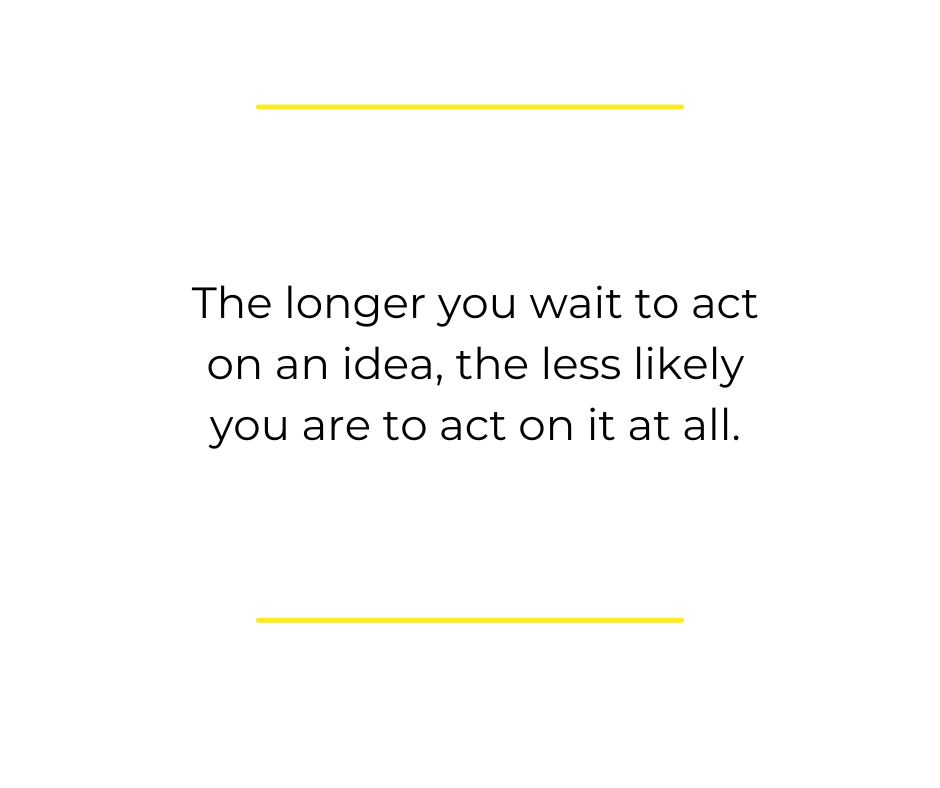
We’ve all experienced it. You leave a conference, seminar, workshop, or meeting inspired and energised. Your notebook is full of ideas. Your motivation is high. You can clearly see the changes you want to make. Then reality returns. The demands of the dance floor reclaim your attention.
The emails arrive. The meetings begin. The deadlines loom. And those exciting ideas slowly fade into the background. Days pass. Weeks pass. Nothing changes. The longer implementation is delayed, the more enthusiasm evaporates. Eventually, good intentions are quietly buried beneath the weight of everyday activity.
Success Lives in Action
Ideas are important. Intentions matter. But neither creates results. Action does.
The people who consistently achieve meaningful success understand that progress requires implementation. They know that execution is where goals become reality. They don’t wait for perfect conditions. They don’t wait until they feel ready.
They act. They adjust. They learn. They improve. And they keep moving forward. Because in the end, success is rarely about knowing more. It’s about doing more with what you already know.
Final Thoughts
As you reflect on where you are today—personally, professionally, or as a leader—consider this:
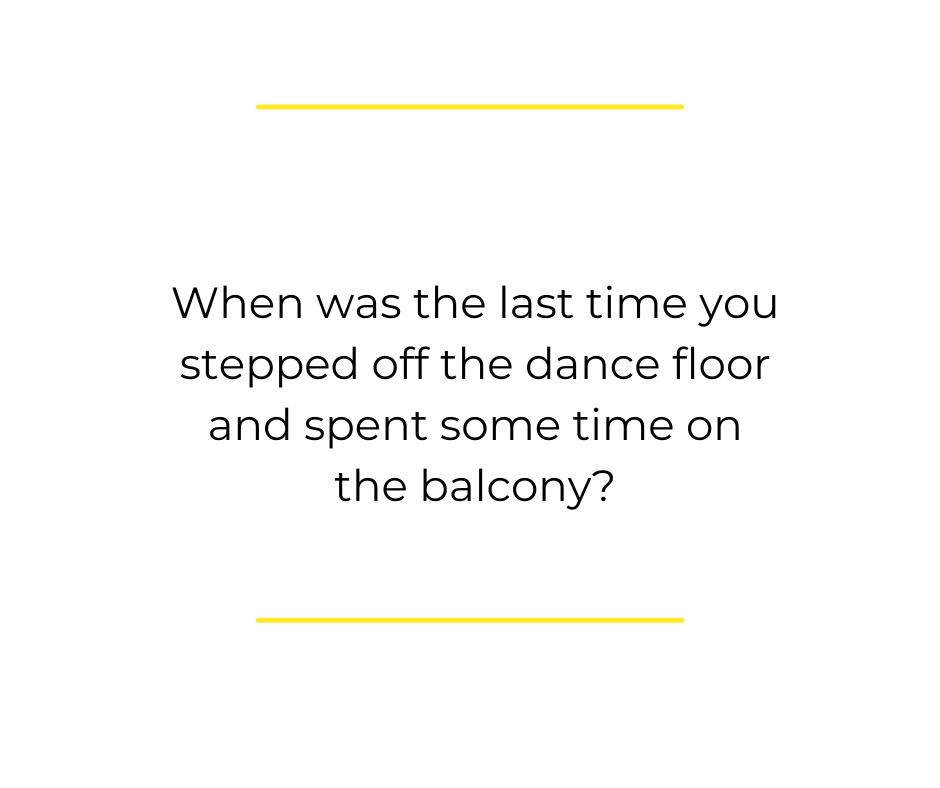
When did you last pause long enough to evaluate the direction you’re heading, the music you’re dancing to, and whether it aligns with the future you want to create?
The dance floor will always be there.
The music will keep playing.
The demands on your time will never disappear.
But every so often, the most productive thing you can do is step away from the noise, gain perspective, and make intentional choices about what happens next. Because ultimately, life isn’t just about keeping up with the music. It’s about choosing the soundtrack you want to dance to.